
 July 20, 2026
AI Didn’t Kill Search. It Changed What Search Is For.
AI is replacing the research layer of search, leaving brands with fewer clicks and less control over how they’re discovered. The next era of search will reward brands that are citable, credible, and conversion-ready.
The familiar model of search is changing. Instead of a single engine behavior or click-driven experience, consumers ask ChatGPT for recommendations, validate them on Reddit, search Google for specific reviews, and watch testimonials on Youtube or TikTok before ever making a decision.
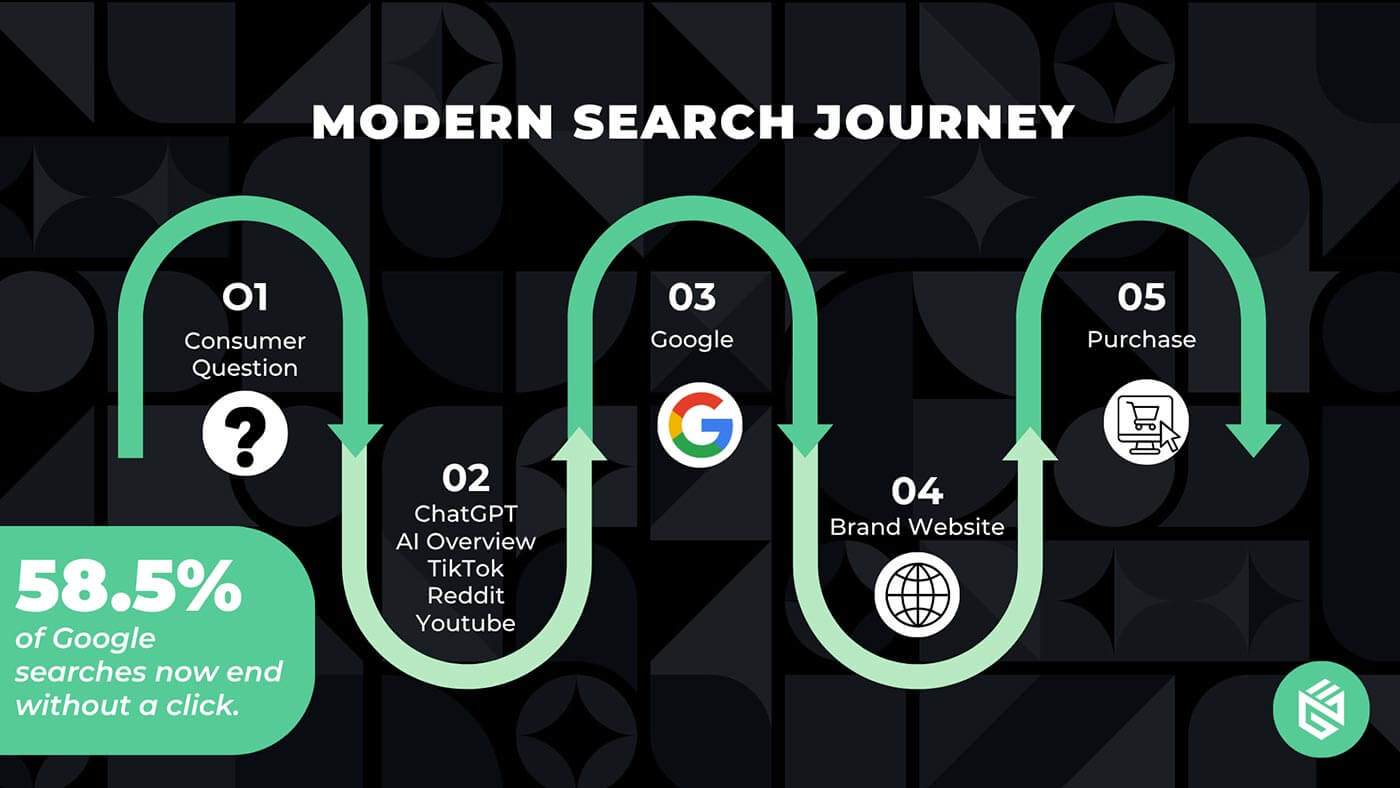
Google’s dominance has fallen below 90% of the market share for the first time in a decade, as AI is increasingly handling the research that consumers once did themselves. As adoption accelerates, with ChatGPT serving more than 800 million weekly users and 37% of consumers beginning high-intent journeys on AI platforms, brands have fewer opportunities to influence decisions before they’re made (SearchEngineLands).
The result isn’t just declining traffic–it’s intent compression. More searches end without a click and fewer consumers are entering the funnel during the exploration phase. The traffic that reaches brands arrives with stronger intent–fundamentally changing how visibility, trust, and conversion work together.
As Lena Niles, EMG’s Group Director of Paid Media, explains,
“Search isn’t shrinking, it’s expanding. We still have Google, but now AI overviews, ChatGPT, and social platforms have become part of the search journey too. The challenge for brands is understanding how consumers move across all of those experiences before they convert.”
FEWER CLICKS. BETTER TRAFFIC.
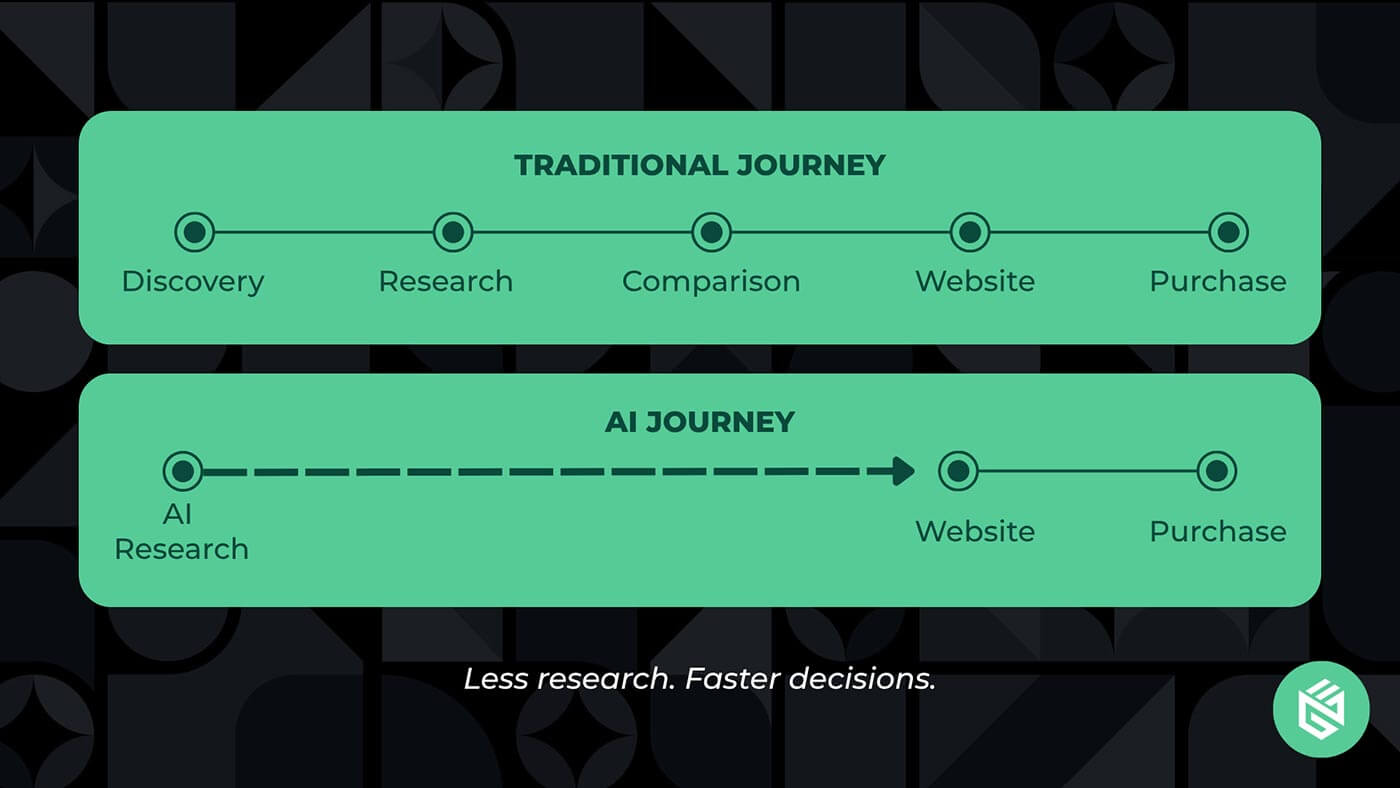
The biggest misconception about AI search is that fewer clicks means less value. In reality, the clicks that remain signal stronger intent and a higher likelihood to convert. AI is filtering out low-intent users before they ever reach a brand’s website. By answering questions, comparing options, and synthesizing information upfront, AI is sending fewer–but significantly more qualified–visitors into the funnel.
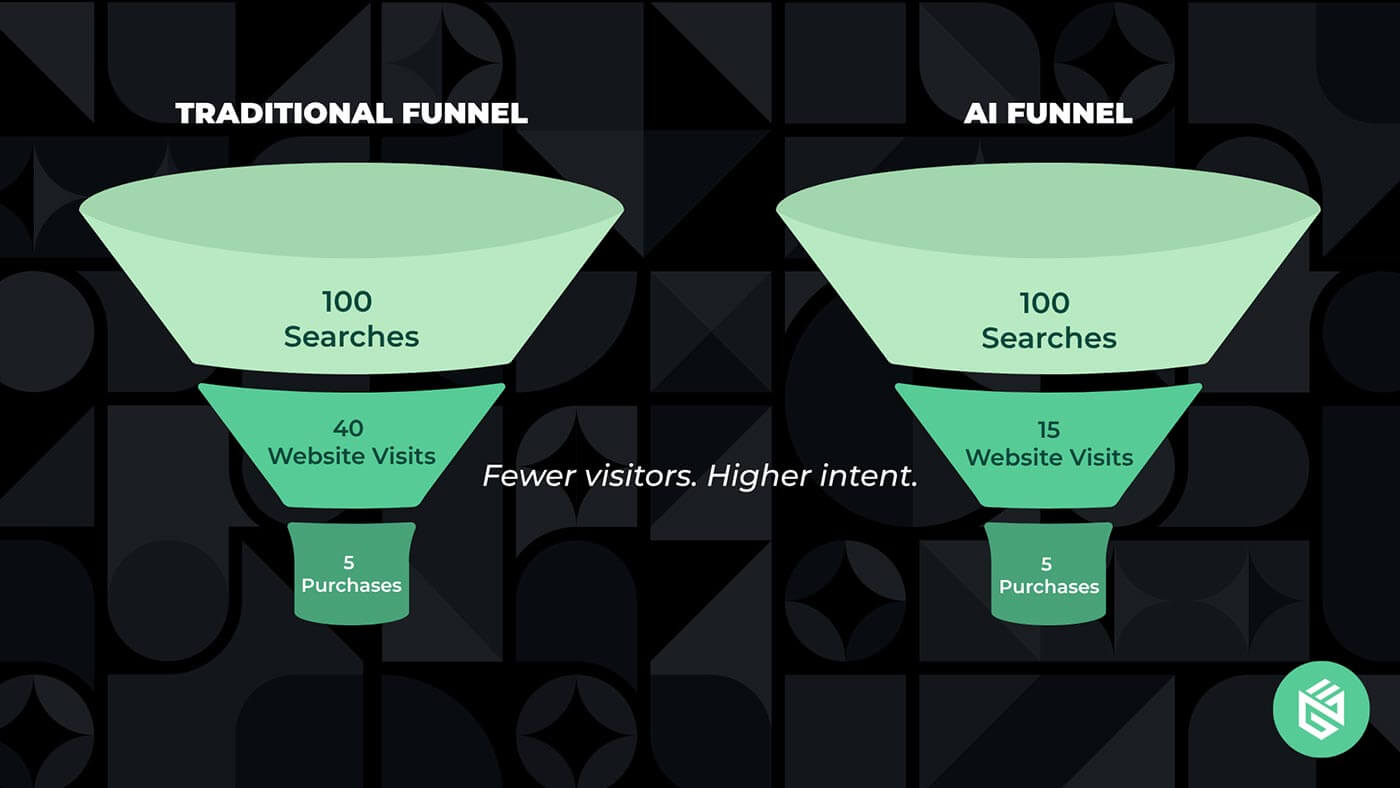
The shift is reflected in the numbers: AI Overviews now absorb up to 69% of research queries as zero-click experiences, while AI-referred traffic converts at 14.2% compared to Google’s 2.8% (Digiday, RankScience).
This changes how brands should measure success: traffic volume isn’t as meaningful as the quality and momentum of visitors who arrive on the website. The future metric isn’t traffic alone. It’s intent velocity: how efficiently customers move from discovery to decision.
Kelly Horn, EMG’s Director of Search, sees this shift as an opportunity rather than a challenge:
“The clicks that remain are often the most valuable. By the time someone reaches your website, AI has already done much of the education and comparison. Our job is no longer to capture every click, it’s to be present when purchase intent is strongest.”
YOUR CONTENT IS NOW A TRAINING MANUAL FOR AI
Traditional SEO was about ranking high in search results. In the AI era, visibility depends on becoming a source that generative search experiences trust enough to reference. Rankings still matter, but they’re no longer the only gateway to discovery. Brands need content that’s authoritative, well-structured, and easy for AI to interpret.
That means optimizing for more than just keywords. FAQs, structured data, and clear site architecture help AI understand your site’s purpose, while experience-driven content and third-party conversations reinforce credibility. Together, these signals make it easier for AI to recognize when, and why, your brand should be recommended.
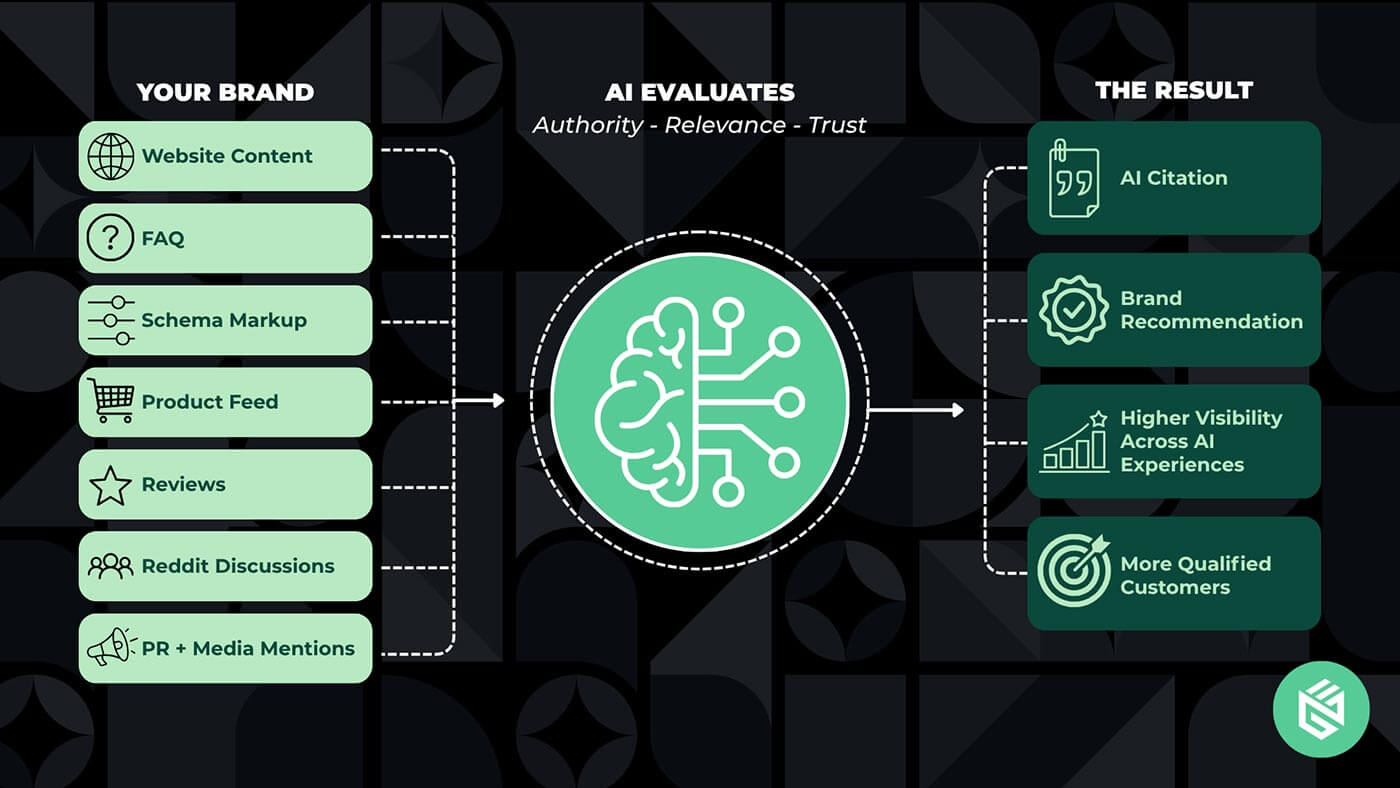
Community-driven content is shaping AI referencing behavior: only 12% of ChatGPT citations originate from Google’s top 10 rankings. Reddit now accounts for over 40% of generative AI citations globally, while 90% of AI citations originate from earned and owned media (Ahrefs, Dealroom, AuthorityTech).
The takeaway is clear: ranking #1 no longer guarantees visibility. Websites aren’t just destinations for visitors. They’re knowledge sources for AI to read, interpret, and reference.
As Lena Niles notes,
“One of the biggest shifts we’re seeing is that showing up in AI is no longer just an SEO conversation. Brands need to think about how they’re represented consistently across every digital touchpoint, because AI is pulling signals from a much broader ecosystem when deciding what to recommend.”
The brands that stand out will be the brands that make their expertise easy to understand, cite, and trust.
THE CONTROL PARADOX
AI-driven advertising systems are increasing performance while reducing advertiser control and visibility. Platforms like Performance Max and Broad Match optimize using behavioral, contextual, and purchase-intent signals rather than keywords alone, creating a growing “black box” where advertisers see outcomes but not the decisions behind them.
This is the Control Paradox: as AI takes more of the decision-making, marketers gain efficiency but lose transparency. Paid click-through rates can fall from 21.27% to 9.87% when AI Overviews appear, while advertisers have limited ability to opt out of AI-integrated placements.
Search is becoming less about buying specific keywords and more about steering AI-driven systems toward business outcomes.
The old question: “What keyword did we win?”
The new question: “What outcome did we influence?”
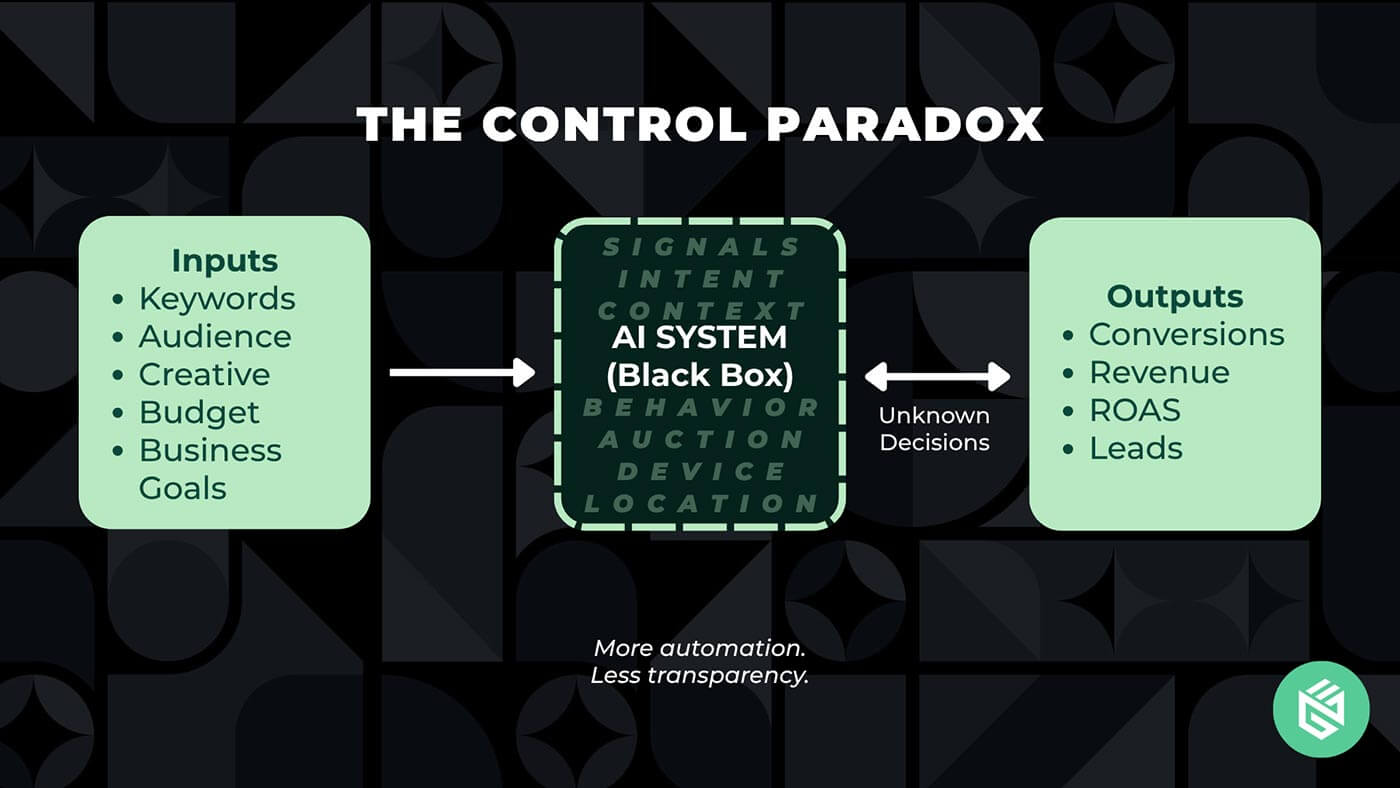
This shift is moving the industry from budget efficiency to inventory security. Future success will depend on securing access to the placements, moments, and audiences most likely to drive action.“The real competition is for the limited moments where consumers are ready to act and where brands still have the opportunity to influence the decision”
As Kelly Horn puts it:
“The real competition is for the limited moments where consumers are ready to act and where brands still have the opportunity to influence the decision”
THE FUTURE OF SEARCH BELONGS TO BRANDS AI CAN UNDERSTAND
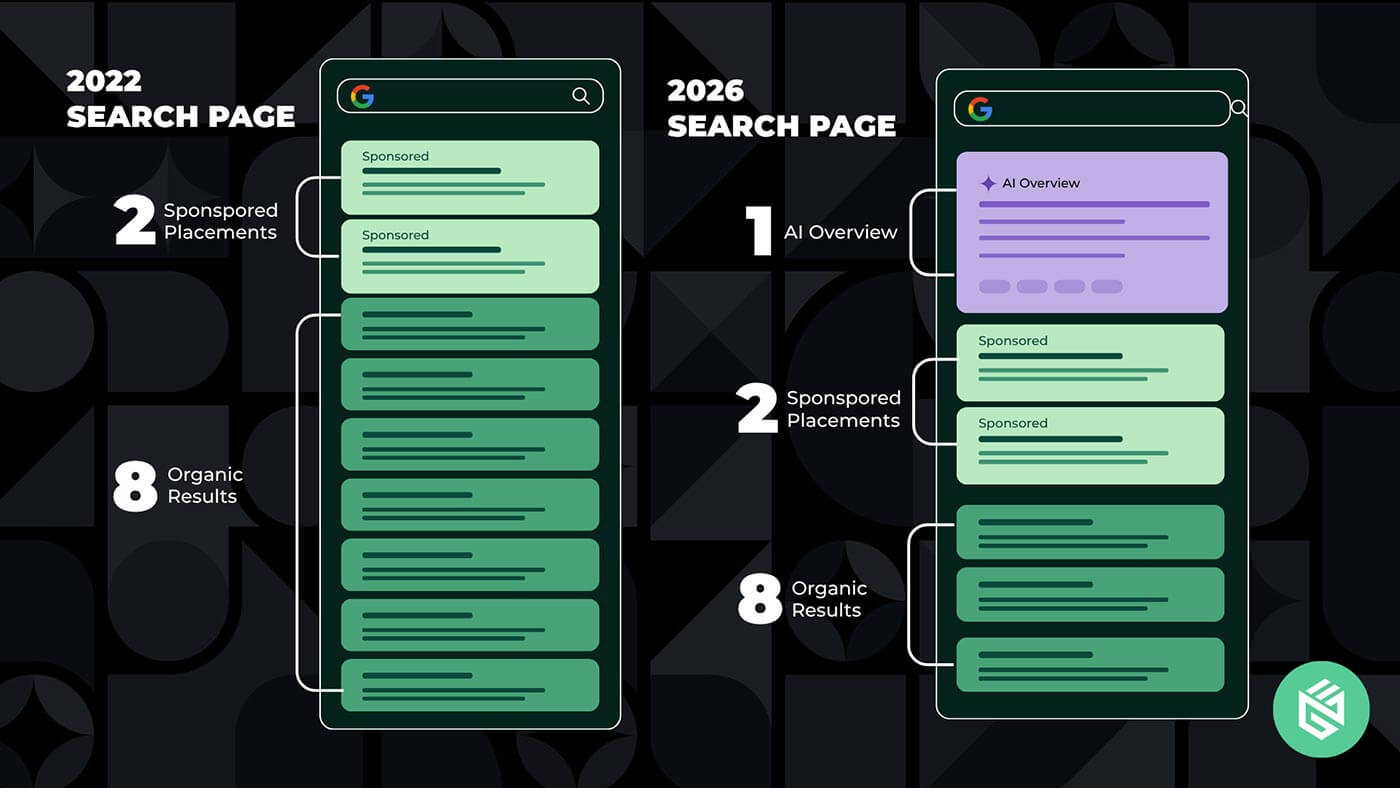
The rules of search are being rewritten. AI is becoming the first stop on the consumer journey.
As AI becomes the filter between brands and consumers, visibility is no longer defined solely by rankings or clicks. It is earned through authority, trust, and a brand’s ability to be understood, referenced, and recommended within AI-driven answers.
Brands that adapt now won’t just keep pace with the future of search–they’ll help define it.
Elite Media Group helps brands prepare for the next era of search with AI-ready content strategies, intent-based media planning, and measurement frameworks built for a world where influence matters as much as traffic.